Distinguished Speaker Series
The VCU Department of Computer Science is hosting distinguished guests from outside organizations to present seminars to the university throughout the semester. Below are the distinguished speakers who are currently scheduled.
Upcoming Seminars
No upcoming seminars at this time. Please check back at a later date.
Previous Seminars
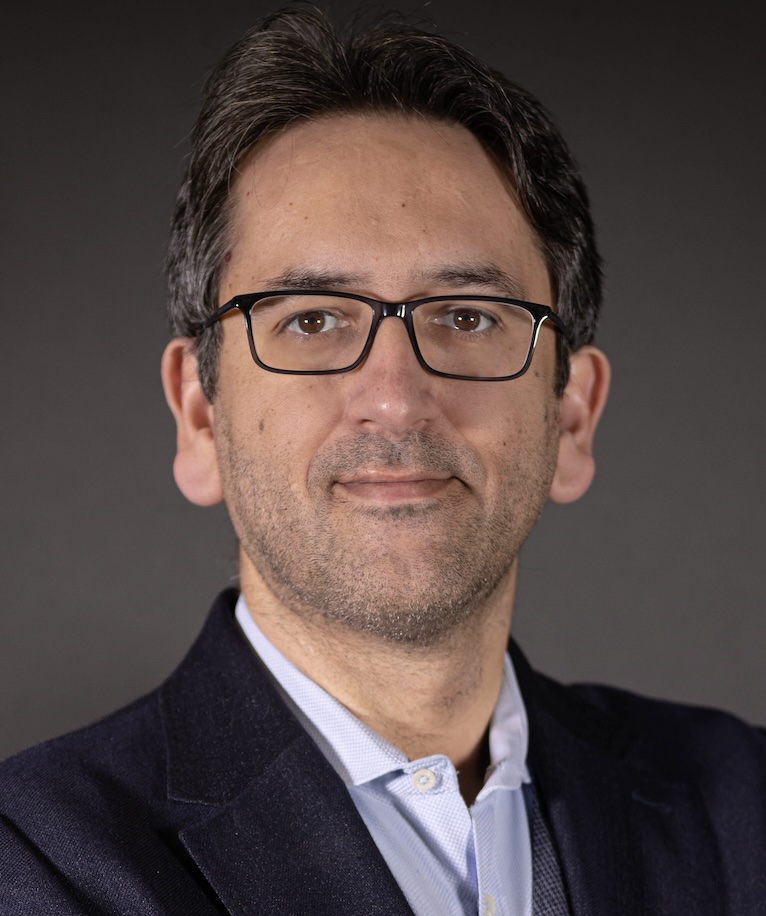 Murat Kantarcioglu, Ph.D.
Professor, Computer Science
Virginia Tech
Friday, October 30, 2026
12pm - 1pm
Engineering Research Building, Room 1313
Securing Networked AI: From GNN Attacks to Multi-Agent Cascades
Abstract: Graph structures underpin many security-critical AI applications, from GNN-based bot and intrusion detection to networks of interacting LLM agents. Understanding how attackers exploit these structures is essential to building secure and reliable AI systems. In this talk, I will present our recent work on realistic attacks and defenses across graph-based and agentic AI systems. I will discuss how graph topology creates GNN vulnerabilities, how orbit-based structural patterns enable universal adversarial attacks, and how social-network attackers evade bot detectors under real-world constraints. I will also examine attacks on system provenance detectors, where adversaries translate feature-space evasions into concrete system actions. I will then turn to cascade attacks in LLM-based multi-agent systems, where adversarial influence spreads through communication, shared memory, and tool use. I will present our framework for online cascade detection and attribution, which monitors evolving influence across interaction channels to detect emerging cascades and identify the agents and pathways driving their spread. Across these settings, a common theme emerges: securing AI requires understanding both individual model vulnerabilities and the structure, dynamics, and semantics of the networks in which models operate. The talk will highlight how realistic adversarial evaluation and system-level monitoring can inform a broader science of secure graph based and agentic AI.
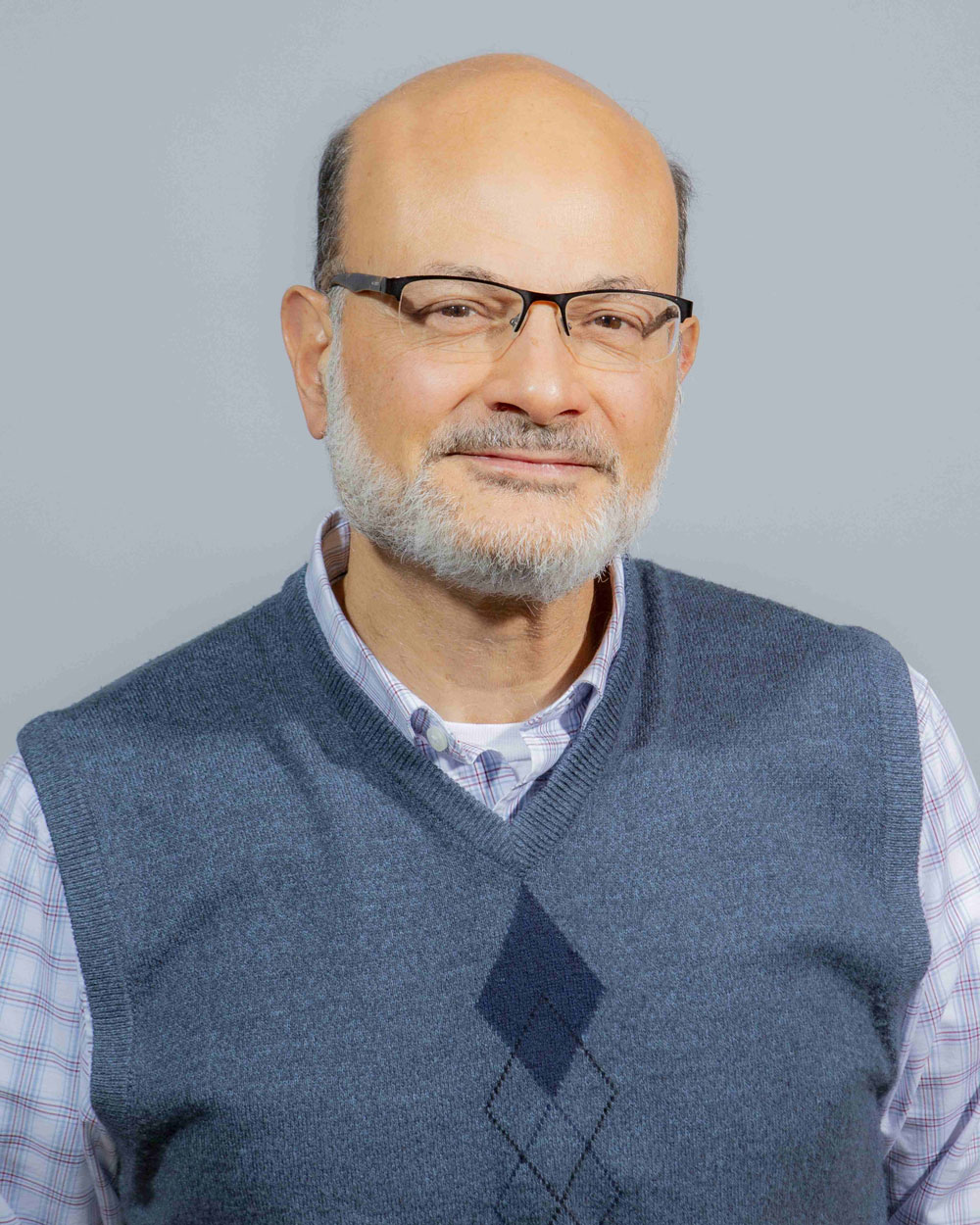 Mohamed Younis, Ph.D.
Professor and Chair, Computer Science and Electrical Engineering
University of Maryland, Baltimore County
Friday, September 25, 2026
12pm - 1pm
East Engineering Hall, Room E1232
Hardware-assisted Internet of Things (IoT) Security
Abstract: The notion of the Internet of Things (IoT) has emerged to characterize the internetworking of numerous and diverse devices to form ubiquitous computing systems that enable probing the environment, sharing data, and controlling physical processes. IoT applications can be found in many sectors such as utility infrastructure, healthcare and transportation. The societal impact and role of IoT elevate the importance of guarding it against security threats. However, countering cyberattacks in IoT is more challenging than in traditional networks due to the wide range of communication protocols and limited capabilities of the involved devices. Security threats for IoT devices range from malicious impersonation and denial of service to leaking sensitive information. The resource limitation restrains the applicability of elaborate security solutions, and mandates the use of lightweight primitives. This talk will highlight how to achieve the security goals through the incorporation of simple tamper-proof hardware circuits that act as a device fingerprint. Specifically, the advantages and challenges of the use of physical unclonable functions (PUFs) will be highlighted. A number of protocols and application scenarios will be discussed where PUFs are employed to safeguard IoT devices against cyberattacks. The talk also will highlight the vulnerabilities of PUFs and present sample protection mechanisms.
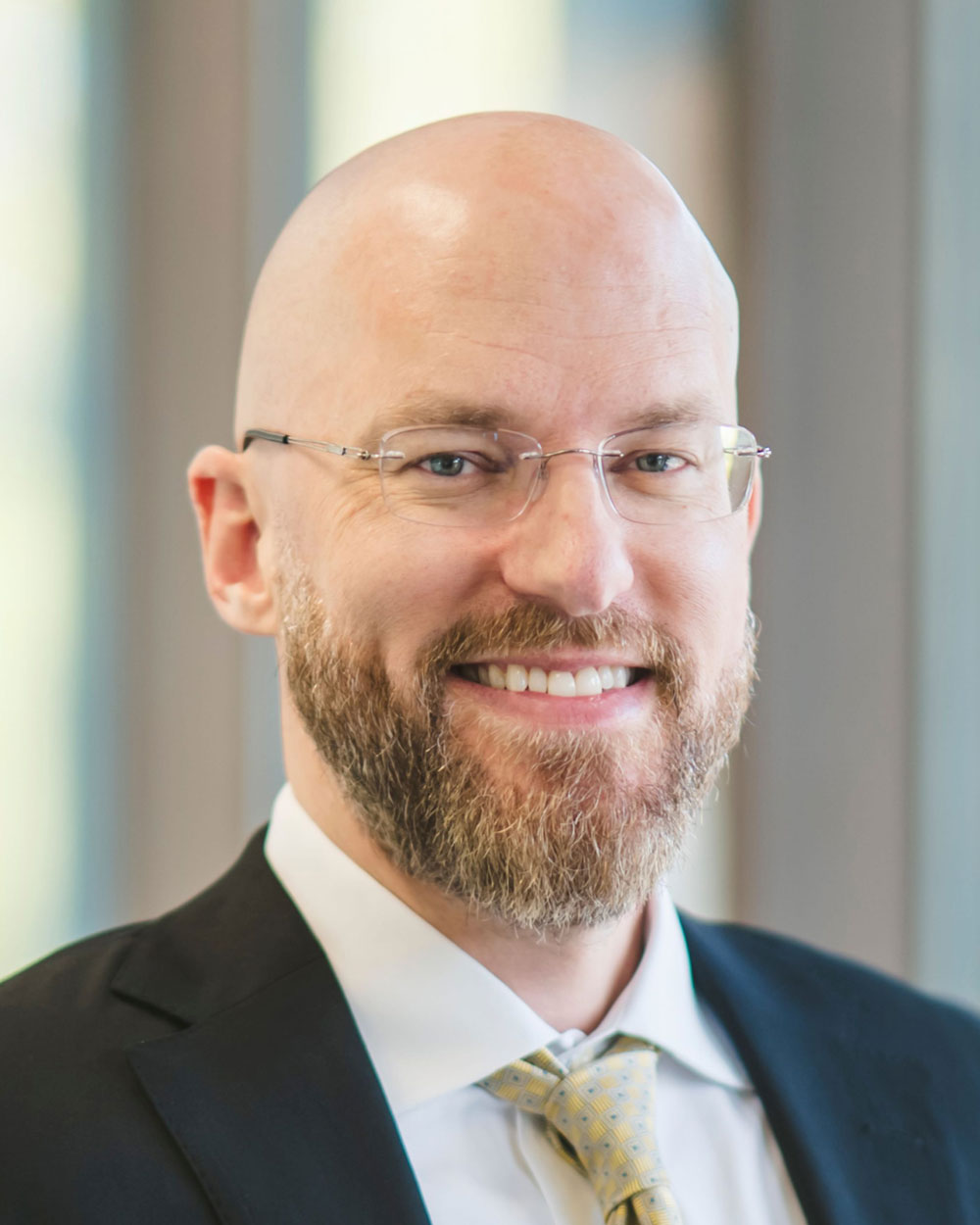 Mark A. Finlayson, Ph.D.
Professor, Knight Foundation School of Computing and Information Sciences
Florida International University
Friday, September 11, 2026
12pm - 1pm
East Engineering Hall, Room E1232
Narrative Natural Language Processing: Recent Advances and Future Prospects
Abstract: Narratives are ubiquitous: they are found in every society and culture and used by nearly every person every single day. Narratives fundamentally shape our world and our perceptions of it, play a central role in the transmission of culture and the expression of implicit knowledge, and are one of the main ways we persuade others for good or for ill. Despite these observations, there remain many NLP tasks specific to narrative that have received relatively little attention, as well as a variety of unanswered questions regarding how narrative works, cognitively speaking. I present steps taken over the past few years by myself and the doctoral students in my Cognition, Narrative, and Culture (Cognac) Laboratory to drive forward our understanding of narrative, both from a computational and cognitive point of view. First, I describe work on narrative event detection seeking to reveal event hierarchies, foreground/background status, and "kernel" events. Second, work on events leads naturally to a new, exact, and provably complete solution to timeline extraction, which is supporting new work on duration estimation and narrative level extraction. Third, I discuss recent advances in the detection of narrative motifs and the categorization and resolution of narrative reference. Finally, I show how all these advances support a vision of extracting higher-level structure from narratives, including common plot pieces, morals, and themes. Along the way, I point out various applications (to, e.g., argument analysis and mis-/dis-information detection) as well as next steps that I plan to explore in the context of generative AI and Large Language Models.